


Pain is not something to laugh off. I have experienced pain I cannot describe, so I know how it feels when you are in so much pain, the type that won't allow you to function. Pain creates agony, and the pain can be overwhelming at this moment, making you feel there is no way out. Some people can become suicidal because they want to be free from the pain.
Chronic pain can affect your mental state and cause depression, leading to severe mental health. We need to be patient and kind to those going through excruciating pain because they might not be thinking. They want to be free from the pain, and they will do anything to be free.
You can control pain with your thought. It is not easy; the technique needs training. Every battle of life is in your mind. You are defeated in life if you cannot control the thoughts of your mind. How we view our pain and how it impacts our everyday life can alter how it affects us. The degree to which you can alleviate your pain depends on the type of pain you're experiencing and your technique.
It's first worth noting that not all kinds of pain can be tackled with our minds. However, acute and chronic pain can be addressed with your thoughts. There is a big emotional tie between pain and your thoughts; by altering your thoughts, you can alter the pain. Often, a person who experiences chronic pain will report that this pain becomes a part of their identity. Therapeutic techniques can alter how one views themselves as a person with pain. It can also alter how they view the limitations of their pain and its day-to-day impact.
Specific therapeutic techniques decrease the reports of pain or the intensity of pain. So, what are some of the methods or approaches? The techniques include cognitive behavioural therapy, acceptance and commitment therapy, and eye movement desensitisation and reprocessing. These therapeutic techniques can be effective but don't erase the pain.
The concept of overcoming pain is not about eradicating the pain. Some pains won't go away, they become a part of your life, but you live above these pains as you won't allow the pain to define your life. You refused to allow the pain to detect how you live your life. The pain is a challenge, and you are determined to live above the challenge.
To live above the pain, you alter how the brain perceives pain, which can decrease reports of pain levels. You can also change how you view your identity as a person with chronic pain or alter the perception of the pain's impact on your everyday life. I am not saying this is easy, it isn't, and that's why I am talking about it. I am here to encourage you and ask you never to give up. I want you to have hope that things will get better because you will rise above the limitations and continue to live life on your terms.
It's all about your perception of pain. Mind-body therapies might be able to alleviate pain because pain involves both our minds and bodies. How you feel pain is influenced by your genetic makeup, emotions, personality, and lifestyle. Your experience also affects it. If you've been in pain for a while, your brain may have rewired itself to perceive pain signals even after the signs are not being sent anymore. You build a consciousness of pain and continue to feel pain even when there is no more pain.
Cognitive behavioural therapy (CBT) is a type of talk therapy that helps you become aware of inaccurate or negative thinking. It allows you to look at difficult situations more clearly and respond more effectively. CBT is the most common psychological intervention for people living with chronic pain.
CBT helps you to challenge and overcome automatic beliefs and use practical strategies to change or modify your behaviour. The result is more positive feelings, leading to more positive thoughts and behaviours. CBT focuses on how thoughts, feelings, and behaviours combine to influence a person's quality of life. CBT aims to teach people that it is possible to have control over their thoughts, feelings, and behaviours.
CBT focuses on changing unhelpful or unhealthy thoughts and behaviours. It is a combination of 2 therapies: 'cognitive therapy' and 'behaviour therapy. The basis of both these techniques is that healthy thoughts lead to healthy feelings and behaviours.
Relaxation, meditation, positive thinking, and other mind-body techniques can help reduce your need for pain medication. Drugs are very good at getting rid of pain, but they often have severe and unpleasant side effects when used for a long time. Research suggests that because pain involves both the mind and the body, mind-body therapies may have the capacity to alleviate pain by changing the way you perceive it.
The following techniques can help you take your mind off the pain and help override established pain signals.
1. Deep breathing. It's central to all the techniques, so deep breathing is the first to learn. Inhale deeply, hold for a few seconds, and exhale. To help you focus, you can use a word or phrase to guide you. For example, you may want to breathe in "peace" and breathe out "tension." There are also several apps for smartphones and tablets that use sound and images to help you maintain breathing rhythms.
2. Eliciting the relaxation response. An antidote to the stress response, which pumps up heart rate and puts the body's systems on high alert, the relaxation response turns down your body's reactions. After closing your eyes and relaxing all your muscles, concentrate on deep breathing. When thoughts break through, say "refresh," and return to the breathing repetition. Continue doing this for 10 to 20 minutes. Afterwards, sit quietly for a minute or two while your thoughts return. Then open your eyes and sit quietly for another minute.
3. Meditation with guided imagery. Begin deep breathing, paying attention to each breath. Then listen to calming music or imagine being in a restful environment. If you find your mind wandering, say "refresh" and call the image back into focus.
4. Mindfulness. Pick any activity you enjoy—reading poetry, walking in nature, gardening, or cooking—and become fully immersed in it. Notice every detail of your actions and how your senses and emotions respond. Practice bringing mindfulness to all aspects of your life.
5. Yoga and tai chi. These mind-body exercises incorporate breath control, meditation, and movements to stretch and strengthen muscles. Videos and apps can help you get started.
6. Positive thinking. Retaining your focus on what you can do instead of what you can't give you a more accurate view of yourself and the world.
You do not have the power to control the weather, but you can control how the weather affects you. Grow more substantial from the pain. Don't let it destroy you. You must embrace pain and burn it as fuel for your journey.
Blog
- Details
- Written by: Arshad
- Category: Blog
- Hits: 283
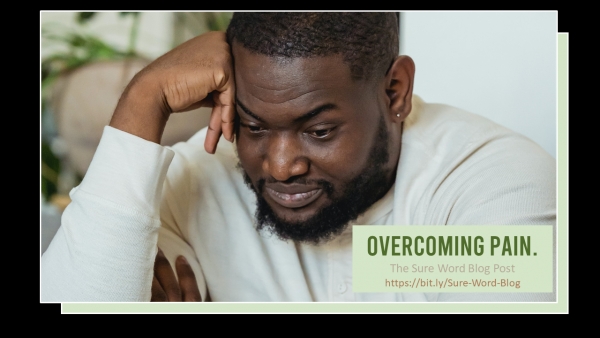
Chronic pain can be extremely debilitating; however, it does not need to dominate your life. Before you can overcome the pain, you must understand the pain.
- Details
- Written by: Arshad
- Category: Blog
- Hits: 613
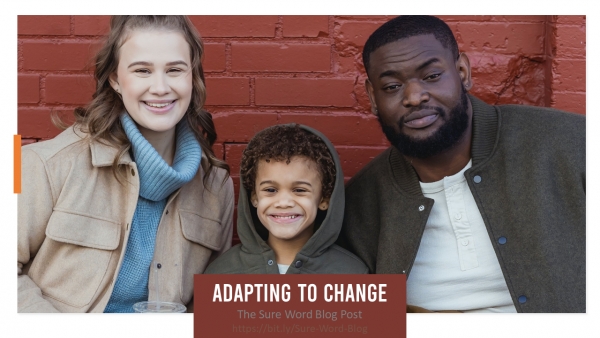
"Change is the law of life. And those who look only to the past or the present are certain to miss the future" — John F Kennedy.
Working as a consultant means changing roles, jobs, positions, towns, and cities and meeting different managers. Some nice and others nasty. It is a change I have learned to contend with in life, and this has helped me handle other areas in my life to be resilient and never to bulge or give up.
I have seen people get anxious for fear of change because they cannot handle change. My friend Catherine stayed in the same position for over seven years until I discussed the topic. I asked if her buttocks had been glued to the same chair. She was pissed off. She got vexed with me and kept her distance for three days. She then rang my line and told me I was correct. It was in 2006.
She explained that she has not done interviews for more than eight years and is scared of change. She is comfortable where she is even though she complained about the salary. She made excuses why she was not willing to move on. I explained that within three years, I had moved to five different positions in the same organisation. We had to list out all the reasons she was scared, and I created a plan on how she could overcome her fears.
Change is an event that occurs when something passes from one state or phase to another. Change is a relational difference between states, especially between states before and after some event. Change is the action of changing something. Change is the result of alteration or modification. It is the balance of money received when the amount you tender is greater than the amount due—all these definitions. I want to go with the relational difference between states as these suits our conversation more.
Change is a constant in life. You cannot avoid change because without change; there is no growth. Change allows one to move forward in life and experience new and exciting things. Life can become stagnant when you don't actively work on evolving yourself. Learning new skills or working on your inner self can bring about changes you never knew were possible. Change can help unlock opportunities you didn't know were available to you.
The concept of change can be unsettling. Many of us would prefer to shy away from changes, whether big or small. However, change is an integral part of your development journey and, most importantly, should be embraced. Change touches all aspects of life but embracing change in your career can contribute enormously toward positive personal development. Change leads to opportunity and experiences.
The better you apply change management, the more likely you will meet your life's objective. You cannot avoid change. The moment you start resisting change, the more challenging your life becomes. You are surrounded by change continually, so it is something you cannot do without. It has a dramatic impact on life. There is no way you can avoid change. You need to embrace it and make your life pleasurable. When you avoid change, it won't be long because it will find you and force you to reconsider how to live your life.
"Your life does not get better by chance; it gets better by change." — Jim Rohn
Change can come to your life through varying means. It could be through promotion or crisis. It could be because of a choice you made. No matter how the change comes, it would help if you learned how to adapt to the change so your life is not disrupted. You can experience change by chance. No matter how the change comes, you are still forced to make a choice.
When you are prepared for change, you have more control over how to react to the change you are dealing with. When you are not ready for a change like Catherine, it is another story altogether and can cause anxiety, panic, and mental disorder. It would help if you prepared for unexpected changes to live your life as an activator of change and not a reactionary.
"Life is a series of natural and spontaneous changes. Don't resist them; that only creates sorrow. Let reality be reality. Let things flow naturally forward in whatever way they like." — Lao Tzu
The Covid-19 pandemic was not an anticipated event. Little detail was known, so there was no adequate defence. The Covid-19 pandemic has reminded us that we cannot avoid unexpected events (crises) in our lives, as these events challenge us and force us to step out of our comfort zone. If we ignore or hide away from the challenge of change, we deny ourselves the opportunity to learn and grow.
"To exist is to change, to change is to mature, to mature is to go on creating oneself endlessly." — Henri Bergson
Your resilience in life can only grow stronger when you embrace change. Learn to manage your challenges positively. You must not hide away and ignore the opportunities that change can bring to your life. Change can impact your life in ways you cannot say. Managing change in life is key to living a life where you are surviving and thriving.
"Progress is impossible without change, and those who cannot change their minds cannot change anything". — George Bernard Shaw
The first method to adapt to change is to change your mindset. Embracing change is stepping into the unknown, and our subconscious will not like the "unknown." so it will resist. Your mindset is the key to success. You cannot control the events of change in your life, but you can control how you react to the impact these events have on your life.
"Life is about choices. Some we regret, some we're proud of. Some will haunt us forever. The message: we are what we chose to be." — Graham Brown
The more you use your power of choice and focus your mindset on positively adapting to change, the more resilient you will be to dealing with the impact that change will bring to your life. You can set the direction you want to live your life if you can know what is essential in your life. With a sense of purpose and meaning in life, you have clarity and focus, and both these elements are necessary to you being able to successfully adapt and manage the impact of change in your life.
I don't hold unto regrets. I can regret an action, but that is it. I learned the lessons I needed to know and used the resources to improve my skills. Regrets significantly impact how you respond to change, and they hold you back in life. Letting go of your regrets is key to you being able to move forward in life. You cannot change what you did or did not do in the past so let it go. The only control you have now is to choose to live in your present and future life.
I don't regret any of the decisions I've made because I have learned something from every choice I make.
- Details
- Written by: Arshad
- Category: Blog
- Hits: 616

My life is a process cycle; therefore, I don't make new year's resolutions. I adopt the iterative life cycle process as I continue to develop toward my dreams, goals, and aspiration.
Your life is a project. You are not getting things done because you are not planning your life like a project. It would help if you had a project plan in all your life endeavours. A project is a temporary endeavour undertaken to create a unique product, service, or result. The temporary nature of projects indicates that a project has a definite beginning and end.
The Video Link
You have a birthdate and a death date. Everyone will die one day. You must understand that your presence here on earth is temporary, just like in any project. So, what is life? What does life mean to you? How can you have it all if you don't know what life means to you?
Life is the aspect of existence that processes, acts, reacts, estimates, and evolves through growth, reproduction, and metabolism. The fundamental difference between life and non-life or non-living things is that life uses energy for physical and conscious development. Life is anything that grows and eventually dies, i.e., ceases to proliferate.
Please pause for a moment and answer me. What is the meaning of life to you? If you don't know what life means to you, you will end up living the life of others. What life means to me is not what it means to you. Throughout modern history, one of the questions humans have asked the most is, "What is the meaning of life? We are all eager for meaning, finality and feeling that our lives are worth more than the sum of their parts.
I am not interested in the meaning of life. I am interested in what life means to you. People who believe they know their life's purpose enjoy greater well-being than those who don't. It is not easy to understand what life means to you. You need to research and search for what life means to you. I am not here to answer this question for you. It is your responsibility.
What is your own purpose in life? Purpose can guide life decisions, influence behaviour, shape goals, offer a sense of guidance and give meaning to life. Some people's purpose is connected to vocation—meaningful, satisfying work. For others, their objective lies in their responsibilities toward family and friends. Others seek a sense through spirituality and religious beliefs. Your purpose in life is to find your purpose and give your whole heart and soul. Also, find your wound if you want to find your purpose in life.
Questions that may arise as you think about your purpose include:
• Who am I?
• Where do I belong?
• When do I feel fulfilled?
Your life purpose is your contribution. Some people hesitate to pursue their life purpose because they worry it sounds like a self-serving or selfish quest. However, the true purpose is about recognising your unique gifts and using your gifts to contribute to the world. God made you a solution to the problems of the world. You are a solution architect. To understand your purpose, you need to know the problems you have been assigned to solve. That is the key to your breakthrough. You are the salt of the earth; you are meant to flavour the life of others.
I have given you a clue on how to figure out your purpose. Once you can figure out your passion, you have succeeded in figuring out your purpose. Your passion will lead you right into your purpose. To understand the meaning of life, you must find your gift or gifts. Once you do, nothing can stop you from finding a way to make it happen. Here is when they say you have found purpose. You will become the most powerful person on earth when your life is on course with its purpose.
Gratitude is key to happiness. Expressing gratitude for the things you have and receive makes you happier. Practising gratefulness is the most accessible key to enhancing your satisfaction in your daily life. When you are grateful for the little tiny milestones, it makes you feel more positive and generates extra energy that will motivate you to go all out. You will become fearless. You begin to feel a positive emotion and build stronger relationships. Thus, you will enjoy life.
Are you enjoying life at the moment? How appreciative are you about where you are at the moment or do you complain and lament as you become the author of the book of Lamentation? If you are not appreciative, then what do you need to change? Could it be that you need to change everything? Gratitude is the best medication available for your mental wellness.
With gratitude, your brain is rewired for the better. Gratitude can boost the neurotransmitter serotonin and activate the brain stem to produce dopamine—your brain releases neurochemicals like dopamine, serotonin, and oxytocin, which allow you to experience happiness.
You must start living life on your terms. Living life "on your terms" means you choose your path. You decide what you do, where you go, and whom you become. You stop letting people shape your thoughts, and you start thinking for yourself and making your own choices—all of which lead to freedom, fulfilment, and joy.
Stop seeking the approval of others to live life on your terms. What are the terms on which you want to live life? Living life on your own terms means you're living meaningfully, leading a happy and fulfilling life. It is possible to enjoy a purposeful career that gives you financial freedom and balance. As such, you will create and enjoy quality time with your family.
To have it all in life is to be contented. Be content with what you have. Be present in your life, and you will see that you have it all. Don't be absent. Be present with your mind, body, and soul. Be present right now, this very moment.
Don't wait for that special moment to wear those best clothes you are saving in the closet; that best moment is right now. We all "have it all." It's the wonder of life. There is no comparison between this life and that life because they are all equally impressive and profound. I would not trade places with anybody. Life is not about wealth and achievements; it is more than that.
You can have it all, but not all at the same time. Set your priorities, trust your gut, and follow your heart. It is never too late to be who you might have been. Stop procrastinating. You don't need to have it all figured out to take a step forward. Go for it now.
The future is not promised to any person. If you keep looking at what you have in life, you'll always have more. If you keep looking at what you don't have in life, you'll never have enough. You've got what it takes to have it all, but it will take everything you've got. Believe you can, and you are halfway there.
- Details
- Written by: Arshad
- Category: Blog
- Hits: 644
Oh, my God! I have read countless times that there is no coincidence in life. Only the illusion of coincidence.
I dedicate this edition to my mother-in-law Late Mrs Cecilia Ominorisa Aberepikima, who died on August 7, 2022, in Lane Fox REMEO Respiratory Centre Redhill, United Kingdom. May her gentle soul rest in peace.
I regular plan and lay out the topics of the Sure Word Blog Post at the end of each year for the preceding year. I am flexible and can upgrade, downgrade, make changes, improve, delete completely, or replace these topics and subjects.
August, September, and October were incredibly challenging months. It was when my family experienced a considerable loss in our life. We shared the loss of a loved one. I remembered my pain when I passed the news to my children and how they cried and wept. I felt their misery.
We were preparing to drive from London to Redhill, where my mother-in-law was recovering after heart surgery. The centre called to inform us that my mother-in-law had gone to meet with the Lord. She was dear to us. So, you can imagine how her death affected us. My wife just lost her mum. My children just lost their grandma. I lost my mother-in-law.
I received a call three days later from one of my wife's friends, who had called my wife earlier and was not satisfied with the mood of my wife. She felt my wife was not grieving and wanted to know if everything was all right. My optimistic response made her worried. She asked if we were both all right. I told her that we were. She exclaimed, "Why will you be all right? You just lost someone dear and precious." I explained to her that we had gone through our grieving already. How can this be, seeing it is not even up to four days since we experienced the loss?
Learning more about the grieving process can help you understand what you are going through. Grief affects us all in diverse ways. It is important to remember there is no 'normal' way to grieve. Most people want you to grieve in a certain way. The many distinct aspects of grief can come as a shock. One of the most frequent questions is, 'is this normal?' The people calling were in shock at the time they called. I tried to explain to them their current state of mind. I use the SARAH change management methodology to explain how they feel, how we think, and the different stages they will go through. We are not all in the same place of grieving at the same time.
Everyone goes through the SARAH method of change when there is a change. The change could be anything. The methodology focuses more on business change. SARAH's method of change is the emotion people go through when they experience an event that comes with a change.
The SARAH model of change of shock, anger, rejection, acceptance, and hope are normal emotions that people go through and should be expected in a new business change initiative. Although this is a huge topic in Six Sigma, it is an emotional aspect we all experience daily.
SHOCK.
The consultant approached my wife and me two weeks before the death of my mother-in-law. He tried to tell us indirectly that all data and road leads to death, and we should start preparing our mind towards death. He was honest, caring, and polite. He was even patient with us.
Shock is a critical condition brought on by the sudden drop in blood flow through the body. Shock may result from trauma, heatstroke, blood loss, an allergic reaction, severe infection, poisoning, severe burns, or other causes. When a person is in shock, their organs are not getting enough blood or oxygen.
We were shocked from getting the fact that my wife would lose her mum, my children their grandmother, and I will lose my mother-in-law. There was a sudden drop in blood flow through my body. I was sweating on my palms. I put on faith and believed that God would turn this around. I went to her bedside and began to pray for her.
ANGER.
Once the shock subsided, I became angry. Shock can lead to anger as people begin to understand what the business change may mean to them. Here, I began to understand how her death would affect the family. Anger can be a good thing. It can give you a way to express negative feelings or motivate you to find solutions to problems. I started thinking about how to mitigate issues arising from her death.
REJECTION.
The next stage is rejection. People may reject the idea of the new business change initiative and wish to be left alone and continue with their existing ways of working. Deep inside, people at this stage may also appreciate that the business change initiative is happening and stopping the initiative is not a plausible option. This stage is also the cycle's lowest point; the only way from here is up.
I struggled, but I needed to be strong for my family. My children are not aware of what is coming. They always visit the hospital with my wife and me, and I know when the time comes, they will understand. We will be there to support them as they go through their SARAH emotion.
ACCEPTANCE.
At this stage, people come to terms with the business change initiative and are ready to accept it.
My wife visited the Respiratory Centre on Wednesday and returned around 1.30 AM the next day. We were unable to talk. On Thursday around 22:00 hrs, she told me her mother's health had declined, and it looked like this was it. I could not sleep. I came back to my computer and continued to work. That was when I accepted the change.
We visited every Sunday from 13:00 hours, but we were called by 08:30 that her health had deteriorated more, and we should start coming. We decided to leave earlier than we usually do. While getting ready at 10:00 hours, they called and gave us the news of her death.
HOPE.
The final stage is hope. It is when people begin to see the positive sides of the new business change initiative and its benefits to them and the organisation. In this case, we begin to see the positive side of the death of our mother, grandmother, and mother-in-law.
Hope is an optimistic state of mind based on an expectation of positive outcomes concerning events and circumstances in one's life or the world. Hope is forward-looking faith.
Despite our loss and the shock, anger, rejection, and acceptance of the event, we have hope and look forward to the things we hoped her death would bring as a positive to our lives.
-------------------------------------------------------------------------------------------------------------------------
The reality is that you will grieve forever. You will not 'get over' the loss of a loved one; you will learn to live with it. You will heal and you will rebuild yourself around the loss you have suffered. You will be whole again but you will never be the same. Nor should you be the same nor would you want to.
― Elizabeth Kübler-Ross and David Kessler